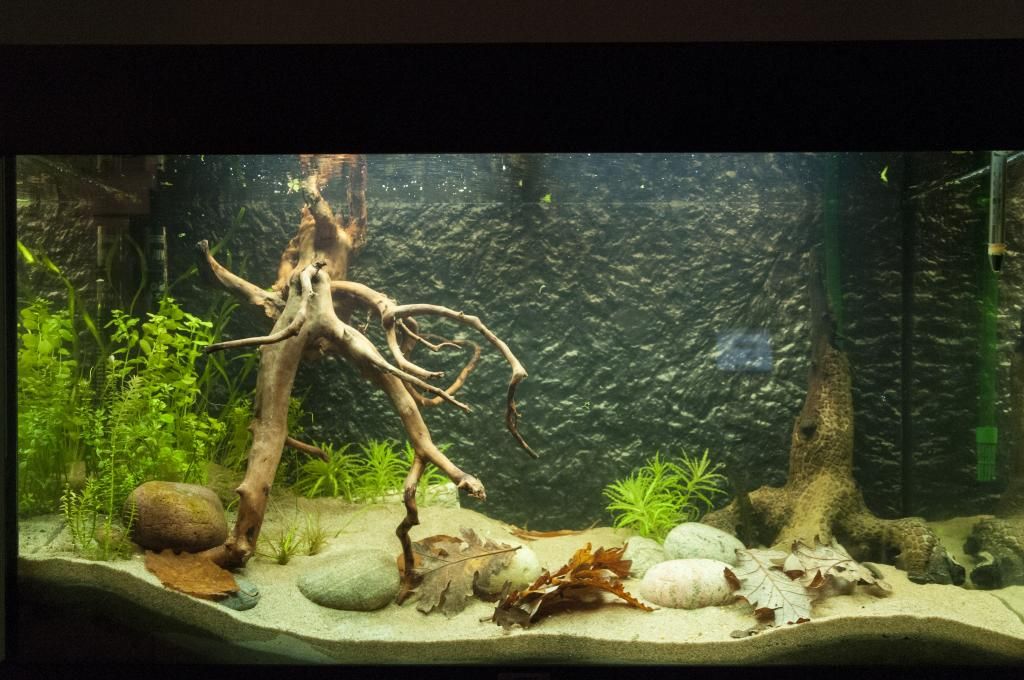
Juwel is an aquarium company from Germany that has been in business for decades. It's sold all over Europe and the most popular brand in the Benelux area and Germany.
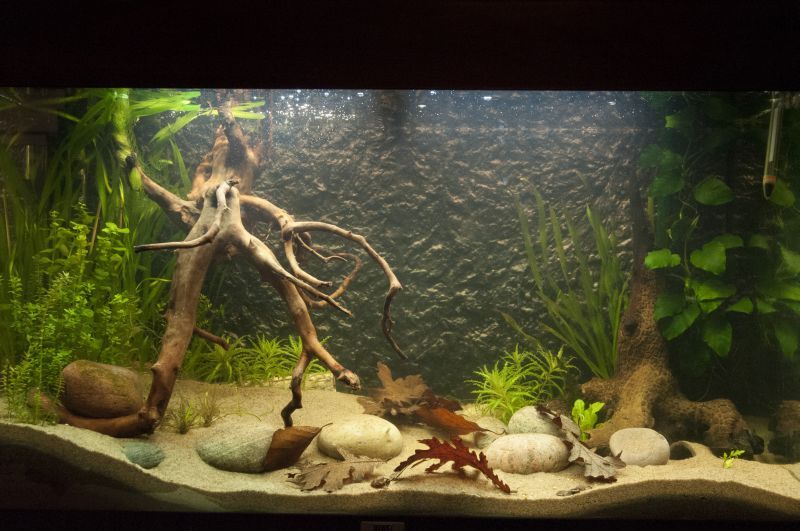
I've been running a Juwel Rekord for more than a decade now. Since I'm
moving to a bigger tank and taking out the internal filter I thought
perhaps I'd share some tips, who knows it may help a beginnrer or two
Lights
Some of the smaller tanks came and still come with a single tube. This
does provide enough light for low to medium light plants and certainly
fish. Problem with the single tube hoods is that the light spreads
unevenly. Adding a reflector helps but the best solution I've found is
to get a sheet of reflective acrylic. Cut it to size and stick it on the
inside of the hood with silicon or tape.
The later models with the dual tubes and certainly the T5 models give a lot more light.
Sound
The juwel powerhead is extremely quiet from itself but the juwels are
still vulnerable to resonance. Make sure the lids are closed fully and
properly. I've found that applying weatherstrip to the inside of the
hood where it touches the glass helps a lot. Also make sure the cabling
doesn't touch the hood.
If the filter has always been silent and suddenly starts making noise
then get the pump out and check the impeller too much dirt or a stray
snail can cause this.
Heater
Almost all juwels (the new vio excluded) come with a heater. These are
simple but effective units that will provide enough power to bridge the
gap between room temperature and 26 degrees. Only if you run a setup in a
really cold room should you need a new heater.
N.B. If you do work in the tank that will drop the water level 5cm below
the top of the heater then unplug it. These heaters don't take well to
switching on when out of water!
The filter
All juwels come with an internal filter, on most models this is glued to
the right corner of the tank. It can be a bit of an eyesore but it
tends to do a very good job if used properly. It also hides the heater
which is a nice bonus. Juwel now makes special small sections of
background material designed to be glued to the filter box to make it
less visible.
The juwel filters draw the water in from the top and thereby also act a bit as a skimmer.
First layer in the filter should always be the white poly pad. You can
use official juwel ones or buy a big sheet and cut it to size. This
layer acts as a particle filter and stops the big debris. I find that I
can rinse it out once under a running tap, after that it needs
replacing. Do maintenace on this layer if it's dark brown and dirty.
After that a coarse sponge should be used. This will already house some bacteria.
Next up should be a basket of cirax. Cirax is juwel's ceramic medium
which comes in a convenient plastic basket that fits nicely in the
filter.
If your juwel system does not come with one of those new practical
inserts to remove the media then I would advice you to tie a piece of
nylon line to this to allow for easy removal.
Last in the stack is a fine sponge to "polish" the water or make it clearer.
Juwel also makes some special action media.
Carbon
A fine sponge coated in carbon. Useful after medication or if you don't want any tannins in the water.
Nitrax
Specially devised to remove excess nitrite. As juwel says it:
"Nitrax is a biological filter on the containing specialist
microorganisms to break down poisonous metabolites (ammonium/nitrite) in
your aquarium"
It's a coarse sponge. Tried it once, couldn't notice much difference.
Phorax:
Ceramic media coated in an aluminium compound that will bind upto 12 mg
of phosphate per gram of product which is not a bad ratio
Filter maintenance
As we all know a filter is vital for your aquarium. A juwel filter should be checked once a week on average. Here's how I do it:
1. Stop the pump by unplugging it
2. Take off the exhaust pipe and lift out the pump
3. Keep a bucket or container nearby and gently pick out the polypad,
this does leak dirt so be careful not to leak it back into the tank.
4. Draw half a bucket of water from the tank. Get out the sponges, take a
look. If anything seems dirty give it a squeeze or two in the bucket.
Try not to do this to all sponges at once, stagger it so you do one or
two each week.
5. Take a small piece of airhose and syphon the bottom of the filter box, also in the compartment where the heater sits.
6. replace the sponges.
Don't be surprised if you find shrimp or little fish in the filter box,
they sometimes can squeeze in and they find a lot to eat there.
Juwel claims that you should replace sponges every 3-9 months. I find
this only to be true for the special action media. The rest can be used
until it falls apart and that's a LOT longer!
Nitrax and phorax will be saturated after 6-8 weeks. Carbon can last a
bit longer. After a nitrax sponge is full you can continue to use it as
a coarse sponge
seeding a filter
A lot of juwel filters use the same sponge size. This means that it's
easy to "seed" a new juwel system by trading one or two sponges with
someone with an established, trouble-free aquarium. Transport the
sponges in water from the tank of the owner, stick 'm in your filter and
you're off to a flying start. Don't forget to feed the bacteria on it
though either with ammonia or some decaying matter like the thawed
shrimp in a net.
Seeding doesn't replace a proper cycle but it can cut down the time needed significantly.
the pump
Juwel has two main series, the older bioflow which sits in a light grey
plastic holder which can be removed by squeezing it on the narrow sides.
After that you can access the impeller and other internal parts for
cleaning.
On the newer eccoflow you can simply screw of the bottom part and you have immediate access to the impeller.
In both series you have a choice of three strengths of pump. If you
think your aquarium needs less flow you can replace a 600 by a 400lph
model and if you want more flow you stick in a 1000l/h.